
Why Use an Epilogue?
A practical purpose for a little tidbit after the story—and a powerful tool for reader satisfaction.

Where a prologue whispers of what was, the epilogue hums with what might be.
To listen to this post, please press the play button below:
How many times have you reached the final page of a book, closed the cover, and thought: Wait… what happened next? Maybe the protagonist survived the climax, but what became of their relationships, their dreams, their scars? Abrupt endings may satisfy minimalist readers, but for those of us who fall in love with characters and worlds, the story doesn’t end when the plot does.
I’m one of the “want more” readers. Sure, I can imagine what happens after the curtain falls, but I’d rather see what the author intended. Even if the happily-ever-after isn’t so happy, I find it more satisfying to glimpse the aftermath. That’s where the epilogue comes in.
The Last Thread in the Loom
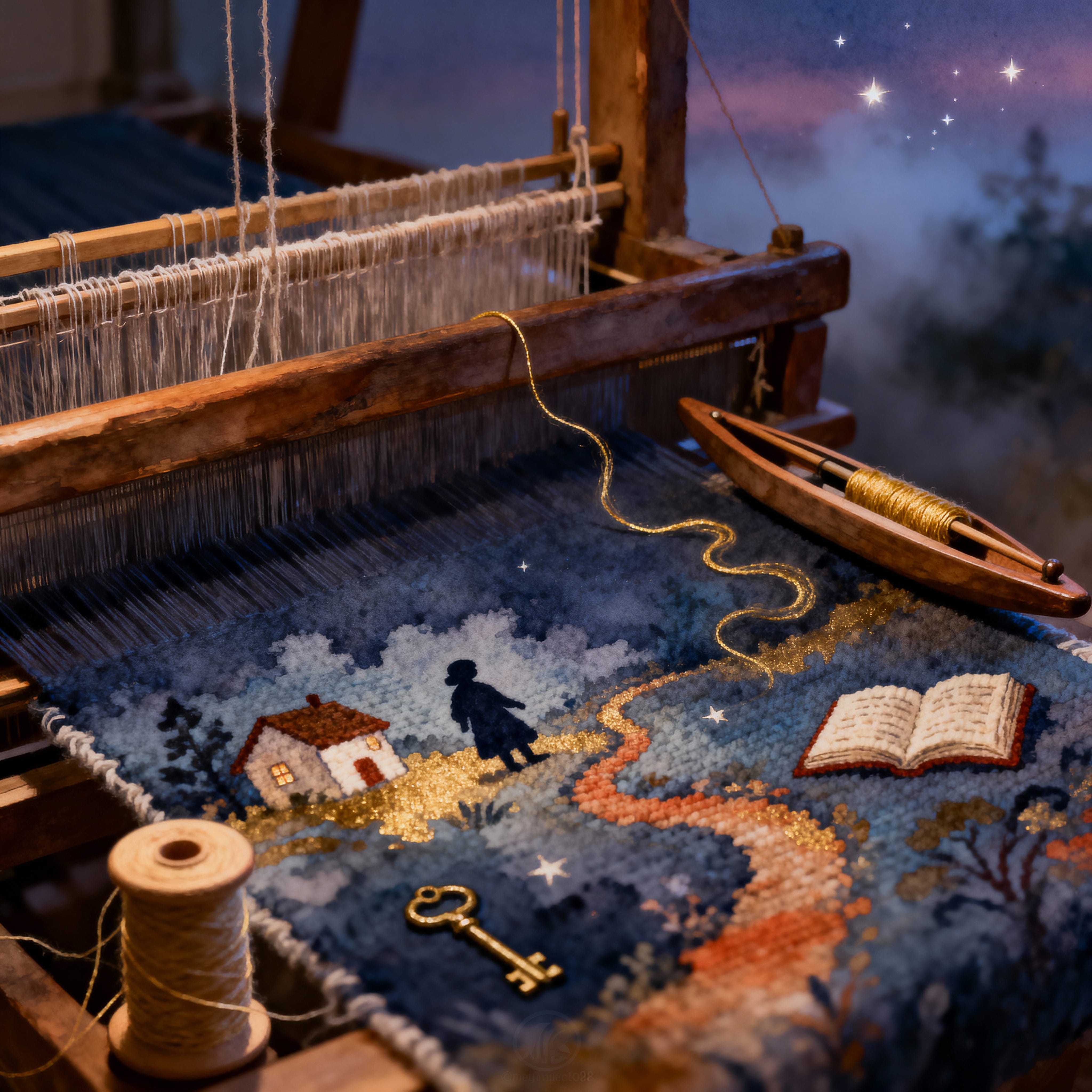
In folklore, the weaver’s loom is a symbol of fate, story, and time. The warp and weft stretch across chapters, characters, and choices—but the final thread, the one that seals the edge and keeps the cloth from unraveling, is the epilogue. It’s not always flashy. Sometimes it’s a single stitch. But it holds the emotional weight of everything that came before.
Where a prologue whispers of what was, the epilogue hums with what might be.
What Is an Epilogue, Really?
An epilogue is a narrative coda—a final note that lingers, clarifies, or redirects. It can offer closure, hint at future stories, or reframe the ending with emotional resonance. Some are brief. Others are full chapters. Some are downloadable extras or spoken monologues. All serve the same purpose: to finish the weave.
Epilogues That Offer Closure
These examples show how an epilogue can gently tie off the emotional threads:
Pride and Prejudice by Jane Austen
The final chapter functions as an epilogue, offering a glimpse into Elizabeth and Darcy’s married life and the fates of other characters.
Harry Potter and the Deathly Hallows by J.K. Rowling
“Nineteen Years Later” gives readers a full-circle moment, showing the trio as adults and parents.
To Kill a Mockingbird by Harper Lee
Scout’s final reflections offer thematic closure and a shift in perspective, even without a formal epilogue.
The Great Gatsby by F. Scott Fitzgerald
Nick’s closing meditation on Gatsby’s dream acts as a philosophical epilogue, reframing the story’s meaning.
Romeo and Juliet by William Shakespeare
The Prince’s spoken epilogue delivers moral reflection and finality:
“For never was a story of more woe / Than this of Juliet and her Romeo.”
The Way We Were (film, 1973)
The final scene outside the Plaza Hotel—years after Katie and Hubbell’s romance—serves as a cinematic epilogue. Their brief, bittersweet exchange is a tribute to memory, change, and enduring affection. It doesn’t resolve the story, but it completes the emotional arc. Robert Redford and Barbra Streisand’s chemistry makes this moment unforgettable, a quiet echo of everything that came before.
Epilogues That Bridge to What’s Next
These examples use the epilogue as a hinge—pivoting toward future stories or deeper truths:
Spell Weaver series by Annette Marie
The final epilogue transitions seamlessly into the Steele and Stone series, creating continuity and emotional resonance.Gearforged by Russell D. Jones
A mysterious character gets a POV epilogue, reframing the story and teasing future possibilities.The Hunger Games: Mockingjay by Suzanne Collins
Katniss’s epilogue shows the long-term emotional cost of war and the quiet legacy of survival.The Maze Runner by James Dashner
The epilogue hints at deeper conspiracies and sets up the prequel series.A Drowning at the Maze by me
Isla’s epilogue introduces a new object that will affect her theatre company in the next book—a teaser, a spark, a promise.
Tips for Writing Effective Epilogues
If you’re considering adding an epilogue to your story, here are a few things to keep in mind:
🎯 Know its purpose: Is it closure, setup, or emotional resonance? Don’t add one just because you can.
🧭 Keep it consistent: Match the tone and style of the main story, unless you’re signaling a shift.
⏳ Don’t overwrite: An epilogue should feel like a final breath, not a second wind.
🔮 Leave room for mystery: Even in closure, a touch of ambiguity can be powerful.
📚 Consider your genre: Epilogues are common in romance, fantasy, and mystery—but they can work anywhere if done with care.
Final Thoughts
Epilogues are more than literary leftovers. They’re the last thread in the loom—the one that keeps the story from fraying at the edge. Whether stitched in prose or played out on screen, the epilogue is the final thread that holds the tapestry together.
Whether you’re tying up loose ends or laying the groundwork for what’s next, an epilogue can be the difference between a good ending and a great one.
So if your story still hums after the final chapter—listen to it. Maybe it’s asking for just one more page.
As mentioned in the article, my next book in the Spotlight Sleuth series, A Drowning at the Maze, will be releasing on October 22nd, 2025. This paranormal cozy mystery features a haunted house and a murder at the annual corn maze. Join Isla, her ghostly aunt, and her cat Higgins as they scramble to solve the mystery. It will include an epilogue bridge to Isla’s next adventure.

Is This Article Helpful?
If you enjoyed this short essay about epilogues or want to ask questions, please comment below. I'd love to hear your thoughts.